Showing posts with label South Korea. Show all posts

Saturday, 11 January 2014

WWOOF CSA: local, organic goodness delivered to your door

As someone who loves to cook but dislikes supermarkets, CSA is a dream come true. Toiling through crowded aisles and obscure specialty stores in order to find just the right ingredients can be a huge hassle. Add in the component of living in a foreign country where signs and labels are in a different language and going to get the groceries becomes an altogether stressful experience. Thankfully, on January 20, 2014, this can all come to an end for those of us lucky enough to be living in South Korea.

January 20 is the official launch date of WWOOF CSA. This means, if you are living in Korea, you have the opportunity to have fresh organic groceries delivered to your door! When I lived in Moncton, New Brunswick (Canada!), I loved hearing the weekly knock on my door and receiving my local CSA box. However, since moving to Korea, it's been old-fashioned grocery shopping. I am very happy about the WWOOF CSA launch in Korea - it's too bad that our time is coming to an end in 2 short months and we won't be able to enjoy it for very long.

All that aside, I was privileged to receive a sample CSA basket full of great products:


I decided to make the most of the  mushrooms, onions, garlic, and bread to make one of my favourite appetizers: 
Mushroom Ragout on Garlic Crostini.


Here are the pictures of the process followed by the recipe:


Mushroom Ragout


Garlic Crostini


Ingredients:

500g mushrooms
2 tbsp butter
1 tbsp olive oil
1/2 cup of diced onions
6 cloves of minced garlic
splash of brandy
splash of red wine vinegar
1/4 water
1/4 cup of sour cream 
salt and pepper to taste 

Instructions:

Mushroom Ragout
- roughly dice mushrooms
- in a sauce pan, put butter and olive oil over medium heat until it foams 
- add mushrooms and a generous pinch of salt
- stir occasionally (mushrooms release A LOT of water-- allow them to boil in their own juices and when water has evaporated they will sauté in the oil and butter)
- Once the mushrooms have started to brown add a splash of Brandy and red wine vinegar
- When the alcohol has evaporated add water and sour cream -- cook for 5-10 mins or until desired consistency
- remove from heat and stir in raw garlic
- add salt and pepper to taste
- Enjoy finished product on crostini, pasta, rice, poached egg -- it goes well with so many things!


This recipe was LARGELY inspired by (stolen from) Chef John.

Garlic Crostini

- Preheat oven to 180 degrees
- Arrange baguette slices on a baking sheet; drizzle both sides with olive oil and season with salt
- bake until golden (8-10 mins on each side)
- remove from oven and rub the top side of each hot crostini with a clove of raw garlic
- cool to room temperate and enjoy!


For more information on WWOOF CSA check out the links below:

http://wwoofcsa.com/
https://www.facebook.com/WWOOFCSA?fref=ts

Saturday, 13 April 2013

Part 1: The Threat of North Korea: Living Below the Hermit Kingdom


As expats living in South Korea the happenings up North are always kind of at the back of our minds (they even inspired the name of this blog). It comes up when discussing politics, when considering weekend plans (Let’s check out the DMZ!), and sometimes even when meeting South Koreans with relatives still on the other side. Although everyone living here is aware of the big problems a very short distance away – it certainly doesn't affect day-to-day life. Our first year living here we had no worries whatsoever about our unfriendly neighbours. If they ever made headlines we were far too busy adjusting to our new lives to notice.

For the last month it seems that the media coverage of North Korea’s threats are inescapable: it floods my twitter and facebook all day every day. When I check BBC or Aljazeera it is almost always a top story. It seems the only way to escape the threat of North Korea is to unplug and hang out with South Koreans.  Their indifference is admirable…they've had lots of practice. Most of us ex-pats are not quite as good at it.

While the media is telling us to panic, our South Korean friends are telling us to ignore it altogether. We have tried to remain somewhere in between the two reactions. I would be lying if I said we are entirely unaffected by the information we are getting from the media. It is hard to remain completely emotionally uninvolved when you are constantly being bombarded with messages that the country a few hundred kilometers away is going to make your current home a ‘sea of fire’. Also kind of scary is the warning to ‘evacuate’ because of the impending doom of war. What keeps us generally unaffected is that the source of these threats is utterly unreliable. It is North Korea saying that foreigners should leave South Korea. It is North Korea saying there is a war upon us. It is North Korea saying they are prepared to use nuclear weapons. I happen to have very little respect for what North Korea says and I happen to have a decent amount of respect for what Canada says. So, what is Canada saying?


When the time comes to panic, I have no problem panicking. If I get an email from the Canadian embassy saying to evacuate immediately, that is just what I will (try to) do. If I get a call from one of my South Korean friends saying to take cover and find a bomb shelter that is just what I’ll (try to) do. However, right now, it seems the best thing to do is take the South Korean approach: ignore it until it goes away – which should be in a few weeks.

This week I decided to talk to one of my co-teachers about the situation. He laughingly said, “...don’t worry about it, I’ll call you if you need to evacuate”. When I asked my students if they thought the situation with North Korea was scary they said “Noooo!! – if North Korea attacks America will destroy them!”.

For now I'll remain calm, keep one eye on what the Canadian Embassy is saying, and the other on all the hilarious memes being directed at Kim Jong Un.
The tension of the situation heightens the humor of the memes, while the memes help to ease the tension. I like being able to laugh at Kim Jung Un memes, but the plight of the North Korean people is not a laughing matter. 

I will be discussing more of my thoughts on North Korea in my next post. 

On the lighter side: What Simon & Martini from Eat Your Kimchi are saying about the threat of North Korea:


Wednesday, 26 September 2012

Korean Food Delivery

Ordering delivery is South Korea may be one of the grandest experiences I know. I'm no fan of disposable dishes/cutlery. I hate feeling wasteful. However, I never feel this way when I order Korean delivery. Why? Because it arrives in real dishes.


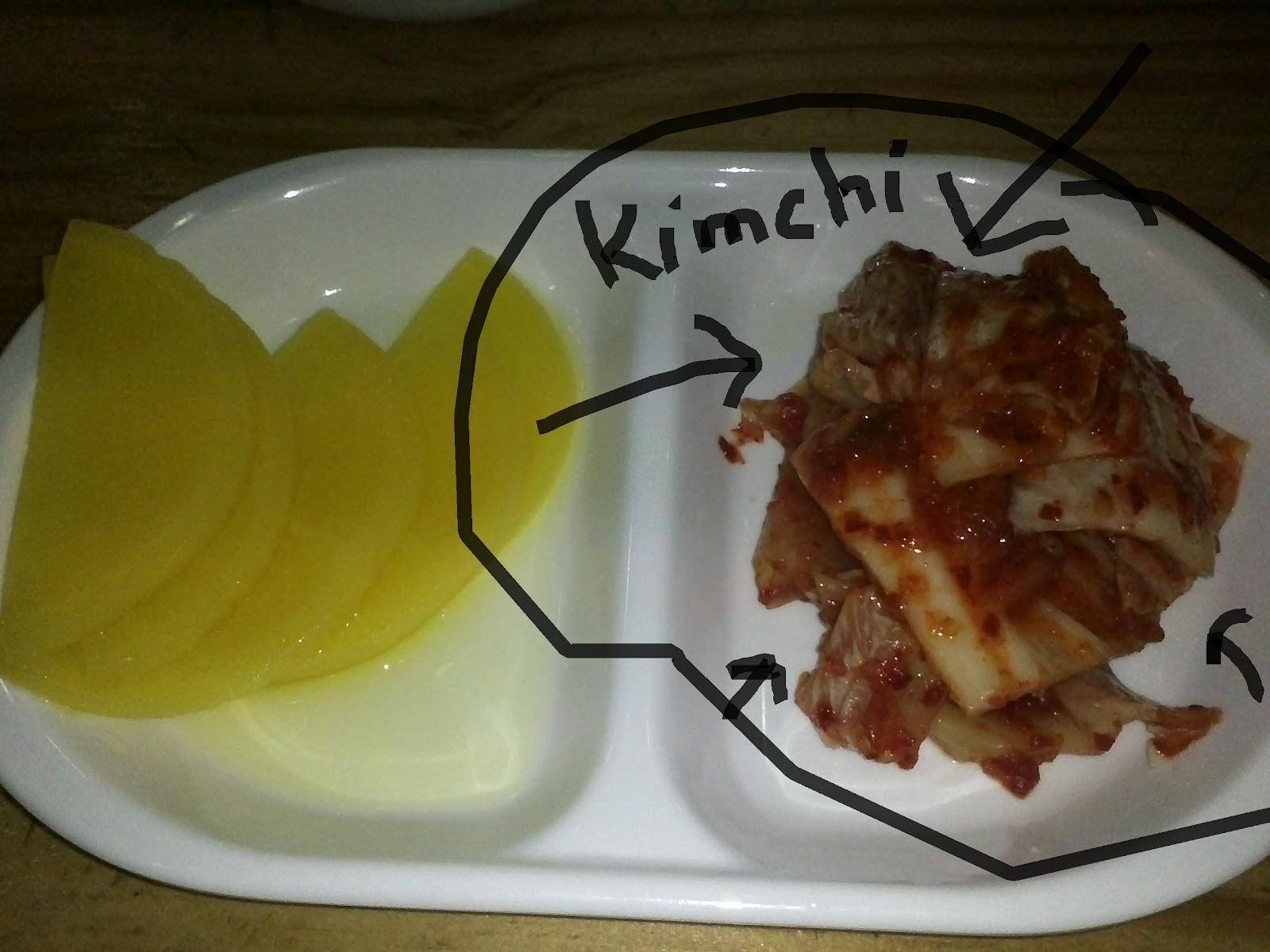
Tonight we ordered bibimbap for two. After making the call, we waited little more than 5 minutes before our bell rang announcing the arrival of our nom-noms (yum-yums). When I opened the door the delivery man unpacked his insulated container and laid out our supper: two bowls of bibimbap, two small bowls of soup, a bowl of rice, kimchi, and pickled radish... all served on proper kitchenware (spoons included!)

All the dishes are covered in plastic wrap so they stay fresh while making their trip to our apartment.

Upon finishing out delicious Korean fast food feast, we piled our dishes together, opened our front door and set them in the hallway. When you order delivery in Korea you don't do the dishes. The delivery person comes and picks up your mess. Very convenient.


dirty dishes

When you are too tired to make dinner, or even to go out for it, Korean delivery is the way to go: your food arrives quickly, it's hot, it's delicious, it's healthy, and the only thing you have to do is eat it. Another bonus is that if you can't finish your meal you can save it for the morning - there is nothing like fried bibimbap mixed with kimchi for breakfast.   

Breakfast of Champions


For more information on Korea Food Delivery, check out this video by Eat Your Kimchi: 


Wednesday, 5 September 2012

Divide and Conquer: Four classroom management tips that work


Mid August marks the beginning of the second term in the Korean public school system. During the first term I assessed the issues I was having with students. After thinking long and hard, and researching longer and harder, I devised 4 extremely effective class room management and language teaching techniques.

Please note: I am privileged with a very large classroom. In the back of my room there are 5 computers, a comfy couch, to benches, and two drawing tables.


The middle of the class is the seating area for my students. I have anywhere from 15-28 students per class and about 35 desks and chairs.

At the front of my classroom I have 2 of my own personal computers. One of these computers is hooked up to a projector. 

I also have 6 fantastic co-teachers at my disposal.

1. U-shaped seating arrangement
During the first semester I kept my classroom as I had found it. There were 6 different groups of desks. In each group three students sat facing three other students. Although this arrangement can be very effective for a multi-lingual class where students are eager to speak English with their classmates, it is not the best arrangement to manage a rowdy, mono-lingual, high school classroom. I rearranged my class into a U-shape. This way I can easily make eye-contact with all my students and get their attention quickly or stare down any chit-chatters.


2. Individual Folders for English Class
English Conversation teachers do not give grades and a student could easily approach the course in a throw-away manner. I decided I would need to instill some alternative sort of value after I watched my students crumple up worksheets and toss them in the garbage. I made a request that the school purchase a folder and name-tag for each of my students. I have a very supportive team and the purchases were at my disposal within a week. Now, I still cannot give my students a mark, but I can facilitate the creation of a valuable English portfolio with vocabulary pages, slang pages, and revised copies of their writing which can be used as future educational tools. I keep the portfolios in my classroom. Students take their portfolios when they arrive in class and return them to me when they leave.


3. English Names
I had initially decided against “naming” my students. I felt it would be possible for me to learn their Korean names and not interfere with their identity by insisting they answer to a foreign name. However, by the end of first semester, I had only managed to memorize three of my five hundred student's names. Two of these students were disruptive troublemakers and the other one’s name was U-gin (which sounds like Eugene). Many of my students had asked me to give them English names and I decided the first class back to school after summer vacation would be naming day. I wanted my students to be as involved as possible in this process; however, I refused to spend the duration of the school year addressing "Lady Gaga" and "Obama". So, I presented 100 popular boys names and 100 popular girls names. Students were given 10 minutes to choose a name while my co-teacher and I walked around and helped any students wanting name suggestions.  Once they chose a name they were instructed to take a portfolio and personalize it with a name tag. I try to have students move around as much as possible during my class. Rather than passing out worksheets, I find it is better to instruct students  to stand up, stretch, and walk to the materials.


4. The Final and Most Important Tip:  
Divide and Conquer                   
Divide et impera: It's effective in war, and it's effective in a high school classroom.

After a 10 minute introduction to the topic of a class, I divide my students into three groups. Each group rotates  between 3 stations and spends between 10-12 minutes researching, discussing, and writing about the theme of the day .


1. Computers
I give the students a simple research assignment that matches the lessons topic. I insist they research in English and use google rather than naver (the preferred Korean search engine).


2. Conversation
Station 2 is conversation with me. I introduce a discussion question and highlight new vocabulary and grammatical structures.  These  conversations have proved to be fun, engaging, and have helped me to develop deeper relationships with my students*. Even the quietest students prove to be much better at speaking when in small groups.

*Me: What's your mother's job? 
 student: My mother's job is a business man. 
 Me: Really?

3. Reading & Writing
In this station students are 
given a topic to write about and a sample piece. Creative writing can be a very difficult endeavor and it is very helpful to have a co-teacher at this station.


Side note: Korean students and nicknames.
My co-teacher & friend informed me that students will often have nicknames for their teachers. Some of the funny & clever ones she’d heard were Submarine (for a short bald teacher), and Upside-down Tri-angle (for a teacher with a big chest and small lower-body). I asked her if I had a nickname and she laughed: Water-purifier.  I wasn’t flattered or insulted. I was simply confused. She explained that there is a Korean commercial that advertises a water purifier that takes all the bad elements out of the water and leaves it in a purified, drinkable state. Apparently, the analogy applies to my class. Clever students.

Tuesday, 28 August 2012

Typhoon Bolaven hits Korea


After causing a significant amount of damage in China and   Japan, the long awaited typhoon Bolaven finally hit the Korean Peninsula. In Hongseong, a town on the Western side of the country we are being hit hard - but not as hard as we had expected. In the days leading up to the the typhoon my co-teachers and students insisted that school would not be canceled. In fact, some of my students assured me that school is never canceled in Korea. However, there has been a significant amount of attention from the media and, contrary to predictions, schools all over the country have been closed. When this announcement was made yesterday, cheers of surprise and joy erupted from the 600+ students at my school and, undoubtedly, millions of other students across the country.


This may be one of the few cases when working at a Hagwon (private academy) is preferable to working at a public school. Hagwon teachers were given the day off, while we, public school teachers, were asked to come in regardless of the fact that there would be no students. Thankfully, my school has reasonable people in authority  and we were released at noon, before the winds really picked up.


By the time I arrived home, the air was littered with garbage and the small tree that Josh and I had been gauging the wind strength with was now under a truck in the parking lot. The great outdoors had turned hostile and unfriendly. We decided to weather the typhoon cradled safely in our officetel. Unfortunately, nature calls even at the most inopportune times and we needed toilet paper.


Earlier in the week we had accidentally bought a scented variety of toilet tissue and so we had no choice but to get to the grocery store and exchange our smelly purchase. The walk turned out to be quite invigorating aside from the dirt in our eyes. It was exciting to watch the trees dance and get knocked around by the wind. 


We decided to continue our adventure and head downtown for some Korean fast food and coffee. We spent the afternoon in the safety of our favourite coffee shop. The windows had been taped up so they wouldn't shatter if broken by debris from the strong winds. We had a nice view of the storm and we were even treated to  specialized lattes.
Business was slow so our barista treated us to some personalized coffee art.


Although we ended up enjoying an only  slightly-stormy surprise day off, many other parts of Korea have not been as fortunate. To quote my friend, and fellow teacher Tijana Huysamen:
During Typhoon Bolaven 54 people became homeless, 10 people went missing and 4 people are dead...2 ships sank, 1 broke in half.. a Truck was overturned, a church steeple fell down, a few houses crumbled... and yet all of us in our concrete forts never thought it was that bad because of course Korea has diligent workers who literally clean everything up as it happens. Korea you amaze me sometimes.

At the time that I am now posting, the reports have gotten much worse. According to channelnewsasia.com

Twelve people were killed and 10 were missing after a strong typhoon pounded South Korea on Tuesday, uprooting trees, sinking ships and cutting power to almost 200,000 homes.

Further Reading:

Tuesday, 21 August 2012

Korean Fast Food


Have you still do not eat?

We snapped this picture on the streets of Hongdae. Korean advertisements tend to take a very creative approach to the English language.

Oh So Delicious Korean Fast Food

When we arrived in Korea our knowledge of Korean food was very basic. Aside from kimchi, we weren't very familiar with Korean cuisine. Kimchi is the most popular Korean side dish. It is fermented cabbage covered in fish oil, chili pepper paste, vinegar, and garlic – amazingly healthy and equally delicious.
Kimchi is one of the world's healthiest foods.
We survived our first night in Hongseong eating cookies my Mum had made and drinking milk we found in the fridge. The next afternoon, the staff from Josh's school took us out for a delicious meal called bulgogi (fire meat). This is marinated beef you wrap in lettuce and eat with an array of lovely side dishes. Everything was ordered for us and we ate happily.

We weren't in the mood to go grocery shopping and cook meals at home considering we had just started new jobs and were trying to knock jet-lag. The first attempts we made at going to restaurants were not very successful. Our results varied from being served some very shoddy radish soup to being refused service due to our lack of Korean language skills.

If we had only known about the simple, easy, inexpensive, and -most importantly- delicious Korean fast foods our first few weeks could have been even better. Here is a brief introduction to my 3 favourite Korean fast foods.

1.Kimbap (or Gimbap)  김밥

To the untrained eye this may simply look like California Rolls or some other variety of sushi. It is not. Kimbap is the Korean alternative to the burger. Only, it is healthier. It is a square piece of dried seaweed (gim) rolled up with rice and strips of carrot, fried egg, pickled radish, sesame leafs, sesame oil, and salt. You can also choose an additional ingredient. For example, cheese (meaning they will add a slice of orange processed cheese –I'm not a fan), chicken (a piece of chicken nugget is added, odeng (steamed fish cake is added), or even spam (you get the idea –once again- not a fan). My favourite type of kimbap, and probably the most popular variety, is chamchi (tuna) kimbap. Although I am bothered by the bad press tuna gets for being radioactive and laden with mercury, I cannot help but eat this several times a week. It is simply delicious and can be found at most any convenience store or snack food joint. So good. This delightful food will set you back a mere 2500 won (under 2.50 CAD). If you are intimidated by restaurants when you first arrive in Korea, kimbap is the way to go. You can find it almost anywhere and its texture & taste make it universally popular.

2.Bimbimbap 비빔밥
This Bibimbap was served with ground beef on top. A pleasant surprise.
If Kimbap is the classic burger of Korean fast food then Bimbimbap is the double quarter pounder . . . with cheese. Bimbimbap means mixed rice. It is a bowl of rice topped with an egg, sauteed and seasoned fresh veggies, and -perhaps the most important ingredient- chili pepper paste. This is what gives it heat and flavour. There are different varieties of bimbimbap. Some like it room temperature and some like it hot. I am one of the latter. Where room temperature bimbimbap is great, hot bibimbap is incredible. We love this dish so much we have it on a tri-weekly basis.

3. Kimchi Jigae 김치찌개
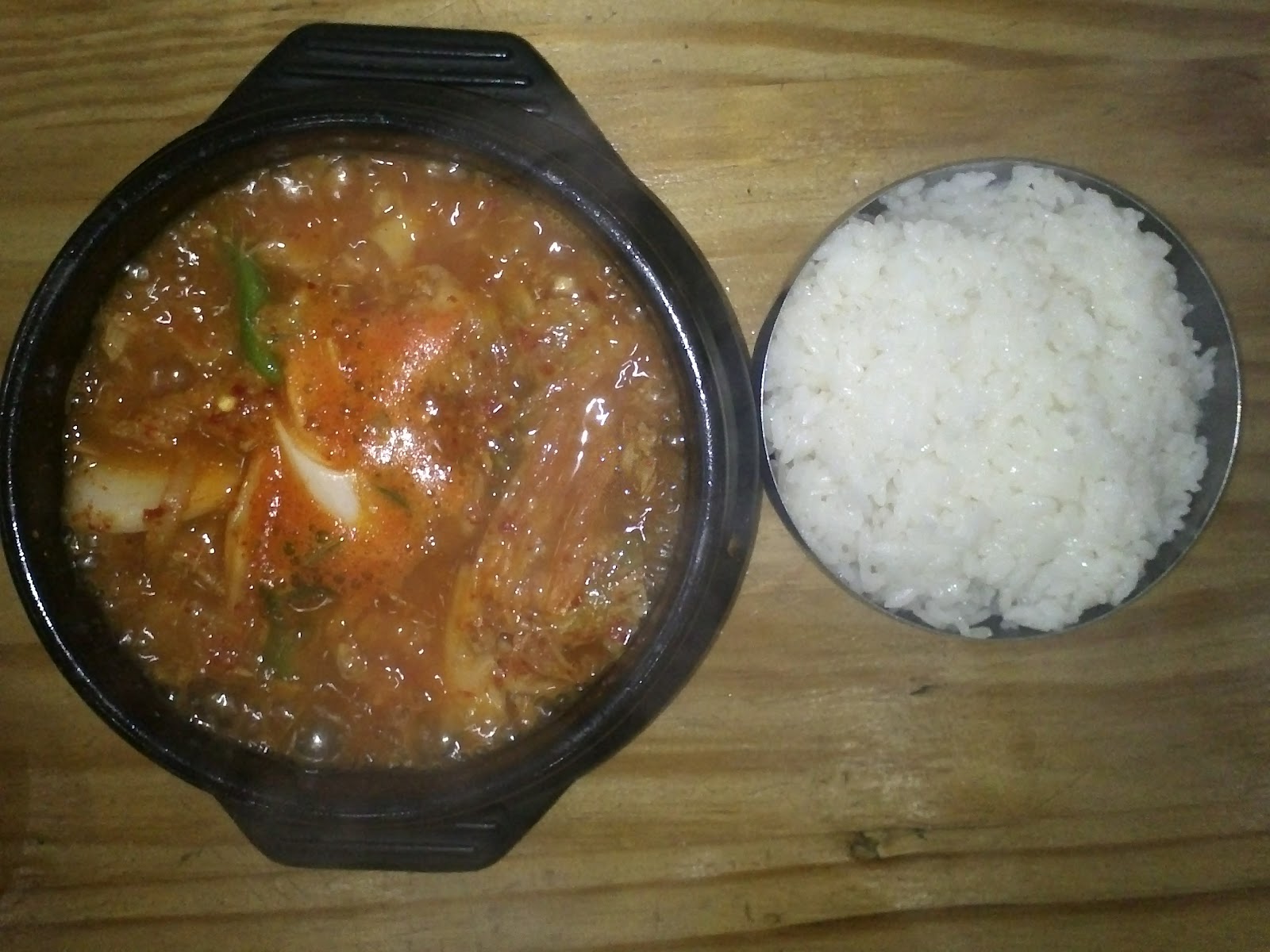
Your eyes are not deceiving you. Kimchi Jigae is served boiling hot.

Although Kimchi Jigae may be a bit more of a stretch for a new ex-pat learning to appreciate Korean food, you will soon find yourself wanting it all the time. I learned about Kimchi Jigae when I asked my conversation class “What is your favourite food”. With my prior description of kimchi, this dish may not seem very appetizing, but once you try it you will be coming back for more. This jigae (soup) consists of boiled Kimchi, small pieces of pork, and rice. For some inexplicable reason this combination is irresistible.


A Feast Fit For a King 

This entire meal set us back 14000 won, which is just under 14 dollars CAD. Along with our kimbap, bibimbap, and kimchi jigae we were also served 2 bottomless bowls of hot broth and six different all-you-can-eat pickled side dishes. 

Korean fast food is where it's at.


Tuesday, 14 August 2012

Your first day teaching English at a Public High School in South Korea: The Introduction Lesson


so the big day has finally arrived. Many things led up to this day: deciding to come to South Korea, finding a recruiter, filling out a gigantic application, gathering documents, waiting for the interview, waiting for the interview results, applying for the E2 visa, waiting for the visa, getting the visa, booking the flight. And now, you are here and your first day of teaching has arrived. What to do?

You may be a little confused about what the expectations are regarding your first week of teaching. Luckily for me, my first day was very easy: there were no classes. After being introduced to my co-teachers and given a tour of the school and my classroom I was told to go back to my officetel  and “take a rest”. I asked what I should prepare for classes the following day, and I was simply told “Just introduce yourself. Very easy.”

Hmmm. Introducing myself takes 5 minutes (at best). Saying my name, where I'm from and some of my hobbies certainly wouldn't fill the 50 minute time slot for each of my 5 classes. I considered teaching a simple lesson and doing icebreakers until I did a bit of research.

I discovered that introducing yourself in Korean culture is different and, perhaps, a bit more elaborate than a typical Western World introduction. If you want your students to talk to you and feel comfortable around you, you must introduce yourself to them in a way that corresponds to the Korean standard. This means divulging more information than you may consider necessary (such as your age, relationship status, and sometimes religious beliefs).

I am fortunate enough to have a classroom with 2 computers, a projector, access to power-point and the internet. I will outline what I did for my introduction class. This is the lesson I taught to each of my 24 classes during my first week in South Korea. It went over very well with my co-teachers and students. Feel free to use this as a template for your first day.

Slide 1: Welcome to English Class: 
I LOVE English!
This is the slide my students saw when they entered the classroom. I wanted them to feel welcome and create a positive mood in the classroom.

Slide 2: My name is ________.
Your new students may be nervous to meet you and find it difficult to understand you if you speak quickly. However, their reading skills are usually very high. If they can't understand what you are saying they will certainly be able to read this easy introduction. You should tell your students your name and age. By this point, you have, very likely, already been asked your age by your co-teachers. If you don't tell your students how old you are, they will soon ask you. In Korean culture, you must know someone's age in order to know how to address them. This is a very normal question and they do not mean to offend you!

Slide 3-4-5: I am from ____________.
Tell them your home-country, show your country's flag, a map, your home province/state, city/town.

Slide 6-7-8: This is my family.
Show pictures of your parents, siblings, gf/bf, husband/wife. Students want to know about you and your background. Take note: Your co-teachers and students WILL ask about your relationship status. Whether you are single or in a relationship you might as well let them know on your own terms.

When introducing your family you can add language value to your lesson by helping them brush up on vocabulary words: mother, father, sister, brother, grandmother, grandfather, aunt, uncle, etc.. When I showed a picture of my grandmother I asked: "Who do you think this is? How old do you think she is?"

Your co-teachers and students may also ask you about your religious beliefs. Be prepared!!
I decided against discussing my religious beliefs in my class. However, many of my co-teachers and students have asked me about my beliefs and I have discussed this with them privately.

***Side Note*** Ultra-personal questions: During my first week of school I was approached by two fellow-teachers. They asked me how much money my husband made. 

Slide 9-10-11: Your hobbies
I like playing music, travelling, eating delicious food, and teaching. I showed them pictures of me doing all of the above. Once again, take this opportunity to interact with your students. I had a picture of me playing the ukulele. I asked them: “What is the name of this instrument?” Most students didn't know. This is a great way to add learning and language value to your introduction lesson. Same thing goes for travelling pictures. I showed my students a picture of me in Paris standing in front of the Eiffel tower. I asked them “Where was this picture taken? What is the name of this tower?"

Slide 12: Getting to know your students
In the last part of my introduction I told my students how excited I was to meet them and have the opportunity to teach them English. Then, I told them it was now their turn to introduce themselves. Make this activity fun and interactive by choosing an out-going student to start the introduction. I told them to say their name and one of their hobbies. Give them an example first (they may be VERY nervous to speak English in front of you and their classmates). Ex: My name is ____ and I love playing the ukulele.
After the first student has introduced herself/himself ask him/her to choose the next person. This keeps the students on their toes and gives them another chance to speak English (they can gesture to the student they wish to be introduced next and say “Please stand up and introduce yourself.”

Depending on the size of your class, you may have time left over once this introduction activity is finished. I prepared a very simple survey for my students to do if there was time left at the end of class. They were asked to simply interview 2 other students and ask them 8 easy questions. Ex: how many brothers do you have, what is your favourite food?


Make sure to instruct them to write full sentences and to be prepared to share their answers with the class once they have completed the survey. While they are doing this activity, it is a great opportunity for you to walk around and interact with your students individually.

By introducing yourself thoroughly you will engage your co-teachers and students. The people at your new school will, very likely, be curious about you and eager for information. Having an interesting, informative, and educational first lesson is a great way to kick-start your school year.


***Side Note*** You may or may not be fortunate enough to have power-point and a projector in your classroom. Packing pictures of your family, travels, and hobbies is a good idea.

For further reading, check out this highly informative and amusing blog: Kimchi Icecream